Showing posts with label ccm. Show all posts

Tuesday, June 15, 2021

"Revenant Psalms" is now streaming

The streamers are opening up as I write. Looks like Pandora and Amazon are up first. Meanwhile, you can now audition the full tracks for free on HearNow. CDs are not yet in the offing, though I will likely do a short run of 500 or so at some point.


A bit of background: Thinking I was done with this pent-up musical outburst of slapdash records that has coincided with the most recent plague year, i.e., when Enter the Arbiter was completed near the start of Lent 2021, I soon afterwards heard our church musicians offer a rendering of "The King of Love My Shepherd Is" (Psalm 23 set to the tune St. Columba) sometime in mid-March. I thought: Gosh, that is such a lovely, classic tune, I really should work out how to play it, which I soon did and sent a little instrumental video (using only the camera's thoroughly useless built-in condenser mic; what was I thinking?) to a few folks for an Easter morning greeting (all this just to identify the timeframe). St. Columba, though, required me to put down my pick and use all my digits. With that, this record started to take shape, with all of the tunes and settings done entirely pick-less and with no need for long nails. (Good thing, too.) My nephew (by marriage) tells me "the kids today"—I think he likes to say "the kids today" because it makes him sound older—would call it "slappy." Even more than St. Columba, Psalm 39, with a thoroughly groovy/wurly e-piano solo in the closing section, is especially "slappy," more salsa/flamenco than "Just Passing Through" or "Just VII. So (Take Up the Slack)" (both tracks from the instrumental Just, which was released at the end of December). I think of the pick-less approach on this album as an organic combination of light brushing and flicking, occasional snatching, some pluckish tickling as needed, and yes, frequent rhythmic muting or slapping, but without the elegance of the popular "fingerstyle" that is quite beyond me. If Just was a foray into a more pizzicato style of flat-picking, this will be the slappy album. 

The texts are all psalms identified in Year D as underrepresented or untouched by the Revised Common Lectionary. I call them "Revenant Psalms" because, though they have been around for the better part of 3000 years, they are neglected when it comes to the regular reading and preaching rotation of the church, and are thus due for a "comeback." Since many are lament psalms, which function therapeutically to move the praying suppliant from complaint to catharsis to praise, and with so many people, and indeed entire nations and cultures, so in need of healing and therapy (I mean it kindly, but I do mean it), one could well argue their comeback is long overdue.

Several of the texts are metrical paraphrases that I have enlisted, and in some cases adapted, from The Psalter Hymnal (1929), the content of which so far has not made its way onto Hymnary.com.

Four tunes are ancient/traditional, namely, Health from the Cup, St. Columba, Brother James' Air, and Salley Gardens, some of which I have modified, e.g., for vocal range (apologies to Brother James), etc. Eight others, however, are my own, so I took the liberty of giving these guitar-based settings their own names: Neo Sheminith (a nod to the superscription to Psalm 6), Happy is the Nation, The Measure of My Days (both focal verses from Psalms 33 and 39, respectively), Leave a Blessing (it just seemed to fit the spirit of the opening of Psalm 41), Hachilah (again a reference, perhaps a bit obscure, to the superscription), Variation on St. Columba (just what it says), In the Cave (yet another epigrammatic reference to the literary context behind the psalm), and finally, Erhameka [Heb: "I love you"], the simple, hooky progression that drives the epic-length folk-rap of Psalm 18. 

Particularly satisfying and quick to take shape (composed just before dinner, recorded just after) was the Variation on St. Columba, which is rhythmically derivative from and lands on the same resolution as the original, but the chord inversions turn the pastoral tune into a lullaby of sorts—perhaps for a traumatized child suffering from nightmares—which totally reframes this difficult imprecatory psalm. It's as if to say, "Shhh. Be not afraid. The baddies won't get you. God will see to that."

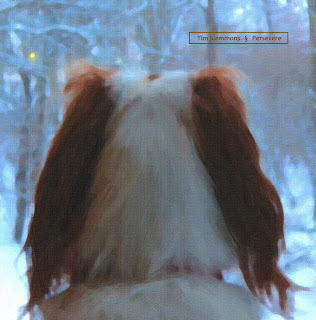
Everything was recorded at home, except for two tracks (Psalms 6 and 18) and a few retakes (on Psalms 39 and 129), that were done in the North Woods of WI, sandwiched between a normally sleepy, but suddenly and surprisingly busy grass airstrip and a lake with not a few skiers and jet skiers working out the kinks. Charlemagne the Cavalier — the handsome cover model on last September's Persevere — was present for most tracks in both locales and snored contently through several of them, which was fine.

I think my favorite track is probably Psalm 41, for which I decided — at the risk of repeating myself, again, and yet again — to compose something that simply made use of, and rearranged, a lot of my favorite chords. I probably should have repeated the last phrase (instrumentally) at the end, since it is so nice and fun to play.  

Another favorite is Psalm 142. The tune, In the Cave, starts with the same fingering configuration used in the sketchy instrumental, "New Thing," on Persevere.

Particularly timely is Timothy R. Matthews' paraphrase of Psalm 82, which I set to a very up-tempo version of Salley Gardens, modifying a couple of lines, especially in v. 2: "feckless titans," "suppress," and "sinister devils" are my word choices, which seem both to honor the spirit of the psalm and speak to the corruption of those today with too much influence and none of it good.

The cover design is mine, or at least the illuminated guitar and dove are my digital creation, superimposed on a scan of the 500-year-old wrapper on Jodocus Windsheim's Confessions of a Repentant Christian (1520), which serves as the background. 

As for the flagrant overuse of reverb throughout, I know, I know, it is an amateurish giveaway. But if there was ever an album that cried out for such a lonely, empty, large-hall sound, would it not be a volume of mostly lament psalms that fell victim to cancel culture decades before it was ever a "thing" and now arise anew to voice the deepest, long-repressed memories of God? Repressed or no, these psalms are still "Word of God" and the Word of God has a way of making a comeback. Just ask Jesus, the Revenant Lord, who has yet another comeback planned, at the close of the age.

Tuesday, March 9, 2021

"Enter the Arbiter: Songs for Holy Week" is now streaming

Now available through your choice of streamers:


Soli Deo Gloria!

P.S. Just remember that physical CDs will be available only for a few more weeks, after which they will be no more.  


Monday, March 8, 2021

"Just" is streaming

Released on CD back on December 30, 2020, Just is now streaming. This one is all "just" guitar, or at least the first seven tracks (gathered into one suite) are just guitar. The last three are virtually all guitar, but for a few synth pads, finger snaps, and overdubs. Certainly it is all instrumental. Included here is "Just Passing Through," which was released as a single back in November, and which now has a sequel in "From Death to Life" (Track 11 on Enter the Arbiter: Songs for Holy Week).

Click on the cover, choose your favorite streamer, and enjoy! [Like all these records, the aim is primarily to just get the idea across. Don't expect Hit Factory perfection here. But I hope you can find several tracks you like.] 


Or, if you are up for it, I noticed YouTubeMusic had a pretty good shuffled play list. Aside from the occasional ads, it sets a good mood for study. 

Friday, February 26, 2021

Enter the Arbiter: Songs for Holy Week


 From the liner notes:

These songs for Holy Week are arranged roughly in terms of the sequence of days, from Palm Sunday to Easter sunrise, the exception being the instrumental prelude and postlude (Tracks 1 and 12), which I include as artifacts from their service as such in chapel worship ... While just two of these tracks (Tracks 3 and 11), are of my own musical composition (the latter piece opening with a brief quotation from the traditional tune “Eventide”), others include original modifications to old standards. On Track 5, the paraphrase of Psalm 61 (a “Year D” psalm overlooked by both the RCL and the daily lectionary) is mine, while the final musical phrase in the tune, ”The Bonnie Cuckoo,” replaces a more traditional repetition of the previous phrase; the final verse in the lyric of Track 2 is mine, inspired by my translation work on Johann Georg Hamann; the lyric for Track 10 is my attempt to fill a relative scarcity of hymn texts for Holy Saturday and “the harrowing of hell.”      

    Where the use of traditional material is concerned, I have attempted (in part as an example to worship students) to offer relatively fresh pairings of texts and tunes, as in the case of Rhosymedre, Noel Nouvelet, and Es Flog Ein Kleins Waldvögelein, but it is hoped that even the more familiar pairings will gain some new life by way of these guitar settings and (hopefully) fresh instrumentation. In each case I have relied on the guitar to provide most of the chords and have kept harmonies to a minimum, emphasizing melody lines throughout, both vocally and with other instruments, since the use of these tracks for online worship (the whole project being birthed while observing pandemic restrictions in late 2020 and early 2021) aims to encourage participants to sing. 

    I only hope this record will serve, however imperfectly, to remind the church and the world of all that we have to be grateful for in the ministry of the one Arbiter between God and humanity, the Judge who was willingly judged in our place, the Firstborn of a whole new creation, the last Adam who makes all things new and before whom all lying and accusing tongues should and shall cease. I also hope that somehow these songs in praise of Jesus, for all that he did during that Holy Week of the world’s redemption, may reach those who do not yet know him, that they may come to do so and “enter the Arbiter” by way of baptism — by dying and rising to new, eternal life in, with, and for him. — TMS

Tuesday, December 15, 2020

Grace Upon Grace

Here is an older post about this track, a post in which I said, and I still say, this is probably the most "single-worthy" track on this 2001 record. I do remember playing it in worship in my first congregation, just after it was written in 1999, and then again, last year in seminary chapel, on December 9, 2019, twenty years after it was first written. Oh my, how tempus does fugit

Make sure to note and enjoy the exceedingly tasty and delectable organ counter-melody—complete with burnouts, of course—in the last verse and in the final instrumental section. 

Here are those streamer thingees, including ...

Spotify.

Here it is on YT:


Sunday, December 13, 2020

The Word in the Wind is streaming

The Word in the Wind [CD link] is now up and streaming. 

Here it is on Tidal

... on Spotify

... on YouTube Music

... on Apple Music

[Watch for other streamer links to be added.]


This CD, by the way, consisting mostly of material written in the late 1990s and recorded in 2001, was built loosely on Advent, Christmas, and Epiphany texts (one track per week, in sequence) from the Christian year. And here we are in Advent again. There is some good seasonal stuff here. 

Best worship songs: Strange Bedfellows, Grace Upon Grace, Living Bread, The Oxen. The latter is a fresh setting in DADGAD tuning of a poem by Thomas Hardy, a text once used by RVW in his wonderful Hodie: Fantasia on Christmas Carols. But don't expect that here! 

Best incidental/instrumental track: Christmas Joy

I would love to have the opportunity to remaster these tracks some day. So much of their tapestry amounts to first takes laid down as I was cutting my teeth on ProTools.

I may say more about each of these in separate posts, but for now, I hope you will check them out and find them worthy of a spot in your annual Christmas rotation. [The Amazon samples do not necessarily represent the best moments here, like the instrumental guitar breaks and the organ in Grace Upon Grace, but you can hear the tracks in their entirety on YT.] 

Thursday, December 10, 2020

"... And They Were Given Seven Trumpets" (30 years old this month)

So, I am in the process of finally migrating my musical material—ah, the career that (mercifully) never was!—from CD-only to streaming services. No doubt as soon as I am done the music industry will make another quantum leap to, say, telepathy or something. Tech leaps always happen in audio first. 

In my last post, I shared my latest piece: all guitar (rhythm and solo) with finger snaps, no quantizing, no lack of human slippage. Here is a post to serve as a chronological and stylistic counterpoint to that piece. Although I have posted about this and other tracks before, having them immediately accessible via streaming seems like a good opportunity to do so again, so that any interested party (there must be someone out there) can listen in and hopefully gain some idea of what I am prattling on about.   


Last Saturday, December 5, it was thirty years since I hoicked a modest collection of gear into Woodland West Recording Studio in Olathe, KS, and recorded the first (musical) track of my first album. The engineer, believe it or not, was a guy named Jack Black, but no, he was no relation to the School of Rock guy. Thank God. This Jack was a good engineer. Quiet, helpful, no nonsense, very efficient. I don't remember the precise dates when we laid down all the other tracks, but I think the rest came together in the span of just two more days. (I had a very limited budget, so we had to fly.) That first night we just did this one track: "... And They Were Given Seven Trumpets." It was inspired, in part, by a meaty trumpet patch on my Yamaha SY77, such a beefy patch in fact that it brought apocalyptic, "last trump" texts to mind. Hence the title, a reference to Revelation 8:2. [And with that, the lifelong habit of reading backwards was begun. But that is a story for another day.] 

[The SY77, BTW, has been under dust covers with a dead battery for several years. I managed to install a fresh one the other day. No mean trick. It felt like doing M*A*S*H-style meatball brain surgery on an old friend. Not something one does very often. I'm not very handy with a soldering iron, but got the job done anyway. The old board sprang to life, defaults reloaded and ready to go, complete with awesome trumpet patch. Oomph! A minor resurrection.]

I remember spending days and days and days, and then a few more days, programming the drums on the HR-16 drum machine. (I haven't had the heart to check its vital signs lately, but fear it may be a goner.) A couple of years later, when Andy Thornton listened to this track, he commented that, where drum machines are concerned, you have to make a decision at the outset: either embrace the synthetic mechanical sound altogether or aim for realism. In this case, I had chosen the latter. I did not want the drums to sound canned, neither here nor on any of these tracks, so I tried to make each fill different, thinking in turn of great drummers like Neal Peart (raining his amazing fills cascading across dozens of toms from high to low), Bill Bruford (wedging weird, ill-timed backbeats between backbeats), and (the early, younger, jazzier) Phil Collins. That much was fun. The tortuous part consisted of flashbacks to the lower brass section of high school band rehearsals, where the snare drums and toms always sat right behind me. For three straight years I had every flam, every roll, every cadence, every paradiddle, every rimshot, every tentative click or maniacal, spasmodic whack drilled into my head (or so it seemed). Thinking through each fill here was like sticking my head between sticks and drums. Ouch! But it was worth the time and trouble to imagine how every hit should sound, every stick would bounce. 

Two other points of observation from those high school years come from being in the stage band. I made for a rather shabby addition to the trombone section, but do remember a guest percussionist performing with us who did some wonderful four-mallet work on the vibes. I've loved their sound ever since and just watching him play was so instructive. It seems obvious now, but there was something so helpful in realizing, if you want to do vibes, then you have four notes to work with. Which ones do you want? A musicologist buddy, on hearing this, said: "The vibes make the track." They certainly are a dynamic part of the foundation of the piece. Dynamic foundation. Sounds like an earthquake, as does this track, if I may say. 

The second lesson from stage band, in which I was more of a fly on the wall or a fish out of water (apologies, Chris Squire), was hearing a couple of great trumpeters — one in particular, a really sweet, affable chap named Jeff Jewsome (God bless you, Jeff!) — do burnouts better than the trombones could, which are designed for such things. I've been fascinated with burnouts ever since. You can hear several of them on this track from the synth trumpets, but they also run throughout the latest guitar piece, the one posted yesterday. Burnouts, pulloffs, downward glissandos—whatever you call them, are a staple of the flamenco guitar style.

The end result of all this: the dated FM keyboard patches notwithstanding, this track still rocks. I love the clean DX7 electric piano. Such a classic, even pastoral sound, it seemed well suited to the section that emerges, clear and undaunted, out of the chaos of the ear-splitting breakstrain. Yes, given enough amperes, this track takes my breath away, even thirty years on. Forgive my regressive adolescence in saying so, but crank it up and listen to it loud. May the Spirit stand your hair on end and remind you: "Aslan is on the move!' Or in more biblical parlance: "Keep awake, for the day of the Lord is near."

Here is a sample on Amazon. Other links may be added as they go live, but the full version is on my YouTube channel (above). To which you are welcome to subscribe. Its free.

Tuesday, December 8, 2020

A good song to use on a Road to Emmaus retreat, no?

OK, we are in Advent, not Easter. I get it. But would this song, "Cleopas," not be a good song to use for a Road to Emmaus retreat?


Monday, December 7, 2020

Why the album title, "Persevere"?

Why the album title, Persevere? Well, in case you hadn't noticed, this has been a tough year for many. The rate of depression and suicide has been horrible, the curtailing of so much of life, work, business, freedom, play, and most important, the church's worship of God, has been severe. Yes, the church has been amazingly resilient in adapting and carrying on under the circumstances. But with the sacraments of baptism and communion cut back, congregational singing deemed too risky (it is, but mostly for the devil and his minions), and the common fellowship of the saints set aside — there is a great risk of complacency on the part of the church and a greater risk that hostile forces will gain strength as the public presence of the witnessing community recedes. More than that, people are facing immense personal challenges and are tempted to give up, either on life or on faith. So, the times call for the church to demonstrate the premiere hallmark of the saints: perseverance.

On a musical note: don't confuse the esthetic with the spiritual. If it sounds like I am prone to a bit of musical OCD, fine. Yes, when I find a good riff, I want to carry on with it, sometimes long after others have lost interest. But this very sense of repetition, to my mind, conveys the subtext of my whole musical output, which is all about the Christian journey. On foot. "We'll do a pilgrimage to the holy place." (v. 3 of "Half the World.") What is it Ecclesiastes says? "I have seen slaves on horseback, and princes ... on foot ..." (10:7) There is, in those long, grinding passages, something of the left-right-left-right slog of the pilgrimage of princes (children of the King of kings) sonically portrayed. We are in it for the long haul. These are not two-minute earworms. 

On a creative note: I recall Tony Banks of Genesis saying that some songs just have to wait their turn. He had written "A Trick of the Tale" in 1969, and it took seven years before it appeared on the band's album of that title in 1976. I was impressed. Little did I know that these songs I had written in the early to mid-1990s would have to wait some 25 years! Again, not to compare my work with the compositions of Tony Banks, the primary creative force in that great band, but at least in this one respect, I can say "persevere" to the aspiring songwriter or recording artist and know whereof I speak. Example: The intro to "Half the World" was written in 1991-92; played as a prelude in 1994 as the first piece in the concert set recently released as Cutting Ruts: Live Tracks and Demos; the song was written after that concert and a trip to the Middle East in 1994. Then, as recently as this year, in 2020, the whole thing was extended to its ridiculous length (with the "pilgrimage" appended to double the length of the song) and the organ solo added. Greg Lake's solo on "From the Beginning" had inspired it from the beginning (!), and thinking of his death (and that of Keith Emerson) in 2016 (and the loss of so many other musical heroes in the years since then) brought to mind the vein in which, and the instrumentation with which, it seemed well to finish it off.

So the title is an imperative to the church, to saints and pilgrims, and to those who aspire to do something creative but are too soon inclined to give up: Persevere!


A little background on "Half the World"

Here is a little background on "Half the World," my favorite track — a long one! — on Persevere. Try not to laugh at the comparison to "Stairway to Heaven" and "Freebird."


Saturday, December 5, 2020

"Persevere" is streaming.

After having the discography residing strickly on CDs all this time, I am finally loading things onto streaming services. "Persevere" is the first one up. Here it is. Please spread the word and share widely.


Saturday, November 7, 2020

The Word in the Wind (2001)

UPDATE: Here is an excerpt from an older post I thought I would rerun, since the songs on this CD are based on the lectionary texts and themes of Advent, Christmas, and Epiphany. Some additional info that may be of interest: I am not the first to set Thomas Hardy's poem, The Oxen, to music. Ralph Vaughan Williams did so before me, but my guitar-based arrangement (DADGAD) is obviously quite different from his choral anthem. Other tuning info, for anyone so inclined: Your Desert Snow (DADGAD), Strange Bedfellows and Living Bread (both standard tuning, Capo 2), Grace Upon Grace (standard, Capo 4).


EXCERPT: The Word in the Wind consists of mostly guitar-based songs and a few instrumental tracks (fourteen tracks in all), written in seminary and during my first pastorate, and recorded about ten years ago (2001). Several of the poems recently published in The Just, Quiet Wind are set to music here (see, e.g., Psalm 1, Living Bread, There is a Reason); the songs are inspired by texts from the Advent/Christmas/Epiphany cycle of the liturgical year, while their sequence reflects the progress from prophetic (Isaianic) expectation (Your Desert Snow, Strange Bedfellows) through the nativity (Grace Upon Grace, The Oxen, Christmas Joy, Innocents' Day) to the call to discipleship (Baptism at Nuweiba, The Response, There is a Reason, Deep Blue Heart, Believers Leap). Like its precursor, A Soundtrack for the Close of the Age (1991)The Word in the Wind may be only loosely described as a concept album, but here the concept, if it is discernible at all, will be most apparent to those who are accustomed to reading, telling, living, and rejoicing in the gospel of salvation according to the Christian year; in the case of instrumental tracks, however, even listeners who have this leg up will have little more than a title, a mode, and a mood, to go on. ...


Tuesday, July 7, 2020

Two new releases to announce today: Elaborations of the Psalms (1—50) and The Great Western Road (CD)

The first is Elaborations of the Psalms (1—50), which I started writing back in 2005 and took up again and finished earlier this year. Over the course of these fifteen years, several of these psalms have been the focus of sermons, so their "elaborations" here will be somewhat longer; they will also dot the yawning gap between 2005 and 2020. But I have tried to maintain more or less the same voice throughout, despite various contexts and timeframes. The style is dense, to be sure, even Kierkegaardian, but I see no reason why an adult Bible study class could not or should not chew on this for the better part of a year. Better still, though, I think this style of exposition, commentary, "upbuilding discourse," or whatever it is, forces one to slow down and let the psalms do their work, so no doubt devotional time or the pastor's study— the native habitat (time and space) in which these elaborations grew up—will be best suited to reading them. The dedication gives thanks for Walter Brueggemann in acknowledgement, not only of his enormous contribution to the church, but for the inspiration his labors have lent my own far more modest program.


Slowing down, by the way, is among the chief spiritual benefits I have gained in my translating work as well. But it is also a quality of the second piece just released, which is my third album, The Great Western Road. Recorded (mostly) in early June, this is also my first record in nearly 20 years. Like A Soundtrack for the Close of the Age, it is instrumental, though unlike that first album, which was mostly keyboards and some guitar, this is mostly guitar, with some keys, and is more contemplative (in the style Ant Phillips' PPP series that has sustained me through the years), as will be clear from the very first track, which, if it weren't so dissonant, would remind me more of another fine meditative treatment of the psalms. After I finally got the audio files uploaded, I discovered two other records from the twenty-teens with the same or similar album title. I have not heard those albums and have no idea what style they represent. But since the title of this record comes from the eponymous guitar suite and that suite was featured in a concert (and in an intended, but never released "live album") from 1994, an "event" (such as it was) also promoted under this title, I think I can claim the oldest sell-by date, for whatever that may be worth, as well as a less urban focus (if those album covers are any indication). 

No need to tell me not to quit my day job, but based on some comments I had from folks last November/December, it became clear that I could be a better steward of this material and should probably record it before I either forget how or grow too arthritic to play it reasonably well. 


I imagine both pieces may have a pastoral function to play at this time, so it seems fitting to announce them together. "Now may the Lord of peace himself give you peace at all times in all ways. The Lord be with all of you." (2Thess 3:16)

UPDATE: Proof copies of The Great Western Road appeared yesterday, with UPC blocking some text. Grrr. Changes made and uploaded for clearer print and greater legibility.

Saturday, December 1, 2012

"Sing to the Lord a new song"

Among the many challenges Year D presents, beyond the sermonic, is the fact that so many hymnals and songbooks overlook these texts as well. Search through the scripture index of your denomination's hymnal, and the odds are that, if the text is not in the lectionary, neither is it going to appear in your lectionary-based hymnal.

One of the wonderful things about the liturgical history of the church, however, is the fact that preachers who may not have had any particularly outstanding musical gifts, when they put their minds and pens to it, came up with some great hymns and spiritual songs, sometimes a tune, sometimes a lyric or psalm paraphrase, and in certain cases both.

Wouldn't it be cool if a gaggle of Christian songwriters, or a flock of shepherds, so to speak, applied themselves to the challenge of writing new hymns and songs based on Year D texts? Yeah, I think so, too. I say, go for it.