Showing posts with label psalms. Show all posts

Monday, May 4, 2026

Revenant Psalms, Vol. V, is on Spotify

Here is the latest and last album in the series — a double! — on Spotify. That's full 1 hour and 38 minutes, nearly two Carnegie (50 min) hours! 

And here is the whole series of Revenant Psalms on Spotify. That would amount to four additional, or a total of six, class hours.

Sorry, I can't actually offer you class credit for listening, but in the grand scheme of things, I am sure it will edify and pay spiritual dividends. By all means, set up a playlist and share it with those you love, including the churches in your network. Let the God of heaven know that we, his church on earth, find his psalms worth singing, and worth singing to him in the name of Jesus, because we love and trust him. 

Blessings and peace in Christ.


Sunday, February 22, 2026

Revenant Psalms, Vol. V is streaming (in full)

Here is the full YT playlist, but without 1000 subscribers, YT pays literally nothing. Please visit your favorite streaming service to download this and other records. Why stream when you can own it and access it anytime, ad free?

Meanwhile, here is the latest track with video and lyrics/paraphrase:

"Psalm 110 [Quaternary Resignation]."


Thanks for your support.


Monday, October 6, 2025

Psalm 9 [Merely Human]


For some reason, the Revised Common Lectionary omits the first eight verses from Psalm 9, which only occurs once in the three-year cycle (12th Ordinary/Proper 7, Year B). By virtue of this partial coverage, I did not prioritize it for inclusion in Year D. Since Psalm 9 and 10, however, are considered to have been a single unit originally, and since Psalm 10 is omitted from RCL and included in Year D, I decided to include Psalm 9 among the Revenant Psalms, where it will be the first track on Vol. V (presently a work in progress). [CORRECTION: The distinction of "first track" now belongs to Psalm 2.]

Those first eight verses do not seem to me any less hopeful or more strident than the remainder of the psalm. Both sections complain about the wicked and praise the Lord. But since I wanted to ensure all eight verses gained a hearing, they are all sung together here in short order over the course of four musical verses. After that, the remainder of the psalm unfolds in single musical verses consisting of roughly two textual verses each. But the affirmation in v. 8 should not be lost, neither in the wordy burst of so many verses sung together nor by way of the failure of both RCL and Year D to include it: "With justice he judges every sphere and his righteous judgments will all be fair" (my para.)

The arrangement is, once again, all guitar, with just a few unobtrusive keyboard pads to lend a further sense of mystery. The Mellotron flute and my favorite patch (Blue Carpet) put me in mind, as always, of the Breeze in the Trees. These trace the melody very simply (or propose one that the vocals never quite manage to follow) along with an organ that hopefully takes us to church. 

It is a sobering psalm, to be sure, as are all the Revenant Psalms, ... as are all (!) the psalms, come to think of it. But, as the Good Lord well knows, if there was ever a time to sober up, that time is now. "Today!"

Soli Deo gloria.


Sunday, December 1, 2024

Revenant Psalms, Vol. IV


Released November 30, 2024. The video for the final track, Psalm 135 [Maker's Medley] will premiere at noon (CST) today, December 1, 2024. May it help keep you in a worshipful frame of mind, after church, throughout this Lord's Day, and always. [This is not a Christmas album per se, more of an Advent thing, I suppose, as are most of the Revenant Psalms, but ... Merry Christmas anyway. God bless us, everyone.]


Thursday, November 7, 2024

Downstream from the great watershed

So they say politics is downstream from culture. OK. So what is upstream of culture, if not faith or some choice of "cult" (in the technical sense)? As Joshua said, "Choose this day whom you will serve." And where does faith emerge? Surely at the great watershed that is everywhere attested, between faith and sin (Romans 14:23b), between the way of the righteous and the way of the wicked (Psalm 1), between the water of life (Ezekiel 47; Revelation 7:17; 21:6; 22:1, 17) and the water or gall of bitterness (Numbers 5; Acts 8:23), etc. And what is upstream of faith? Faith proceeds from the Word, the promise of God; it is a gift of the Holy Spirit.

So if we are looking at a political reformation downstream, which many indicators suggest we are, what role do preachers have, what role the church, in guiding the stream of good and godly sources of faith into the formation of a genuine culture that is worth (re)building and preserving? As accountability begins to make its way through the media, the music industry, Hollywood, academe, etc., the church should not fail to supply what is needed — and quickly — from biblical and from the tried and true, the most trustworthy theological sources: the commandments and the covenant, the 3000-year-old "prayerbook of the Bible" (the Psalms), the entire NT, of course, the earliest ecumenical creeds (Apostles' and Nicene), children's catechisms, the Book of Confessions, etc. 

This, by way of reminder, is the vision and purpose of this website. If a corrupt culture is dying off and a corrupt political establishment is about to be banished from the swamp, if things are going to be (metaphorically) slashed and burned back to the very root or stump, remember: "the holy seed is the stump." (Isa 6:13)

Wednesday, October 9, 2024

YouTube channels

There is some overlap between these two channels, but time does not permit consolidating them. If you like the Psalms settings or other guitar pieces, you know the drill: like, bookmark, subscribe, and share.

https://www.youtube.com/@timslemmons8474

https://www.youtube.com/channel/UCVQ-nVtSS1mawJCInwDacAA

Many thanks.—T

P.S. Also, please note whether playing a video registers in the YT play count. Color me suspicious. 

Thursday, January 11, 2024

Psalm 7 [Shiggaion Chadash]

This psalm is designated a "Shiggaion" in its superscription, whatever that is. Strong's Concordance suggests it is "perhaps a wild passionate song with rapid changes of rhythm." Admittedly, this new setting—("Chadash" simply means "new")—has no dramatic rhythmic changes, but the intervals are a bit wild, and the sassy Dsus4/D trill (I'm talking chord shapes here, not actual notes) lends it a feel that seems worthy of the designation: shiggy. [But, please, let's not confuse it with the "shig" that is going on in west coast cities right now. Lord, have mercy.] 

Year D, by the way, recommends Psalm 7 for the Great Vigil of Holy Saturday and for 11th Ordinary.


Wednesday, November 29, 2023

Psalm 141 [Prayer Walk]

...  is also available at Amazon.


You can read more about this track below.

Tuesday, June 15, 2021

"Revenant Psalms" is now streaming

The streamers are opening up as I write. Looks like Pandora and Amazon are up first. Meanwhile, you can now audition the full tracks for free on HearNow. CDs are not yet in the offing, though I will likely do a short run of 500 or so at some point.


A bit of background: Thinking I was done with this pent-up musical outburst of slapdash records that has coincided with the most recent plague year, i.e., when Enter the Arbiter was completed near the start of Lent 2021, I soon afterwards heard our church musicians offer a rendering of "The King of Love My Shepherd Is" (Psalm 23 set to the tune St. Columba) sometime in mid-March. I thought: Gosh, that is such a lovely, classic tune, I really should work out how to play it, which I soon did and sent a little instrumental video (using only the camera's thoroughly useless built-in condenser mic; what was I thinking?) to a few folks for an Easter morning greeting (all this just to identify the timeframe). St. Columba, though, required me to put down my pick and use all my digits. With that, this record started to take shape, with all of the tunes and settings done entirely pick-less and with no need for long nails. (Good thing, too.) My nephew (by marriage) tells me "the kids today"—I think he likes to say "the kids today" because it makes him sound older—would call it "slappy." Even more than St. Columba, Psalm 39, with a thoroughly groovy/wurly e-piano solo in the closing section, is especially "slappy," more salsa/flamenco than "Just Passing Through" or "Just VII. So (Take Up the Slack)" (both tracks from the instrumental Just, which was released at the end of December). I think of the pick-less approach on this album as an organic combination of light brushing and flicking, occasional snatching, some pluckish tickling as needed, and yes, frequent rhythmic muting or slapping, but without the elegance of the popular "fingerstyle" that is quite beyond me. If Just was a foray into a more pizzicato style of flat-picking, this will be the slappy album. 

The texts are all psalms identified in Year D as underrepresented or untouched by the Revised Common Lectionary. I call them "Revenant Psalms" because, though they have been around for the better part of 3000 years, they are neglected when it comes to the regular reading and preaching rotation of the church, and are thus due for a "comeback." Since many are lament psalms, which function therapeutically to move the praying suppliant from complaint to catharsis to praise, and with so many people, and indeed entire nations and cultures, so in need of healing and therapy (I mean it kindly, but I do mean it), one could well argue their comeback is long overdue.

Several of the texts are metrical paraphrases that I have enlisted, and in some cases adapted, from The Psalter Hymnal (1929), the content of which so far has not made its way onto Hymnary.com.

Four tunes are ancient/traditional, namely, Health from the Cup, St. Columba, Brother James' Air, and Salley Gardens, some of which I have modified, e.g., for vocal range (apologies to Brother James), etc. Eight others, however, are my own, so I took the liberty of giving these guitar-based settings their own names: Neo Sheminith (a nod to the superscription to Psalm 6), Happy is the Nation, The Measure of My Days (both focal verses from Psalms 33 and 39, respectively), Leave a Blessing (it just seemed to fit the spirit of the opening of Psalm 41), Hachilah (again a reference, perhaps a bit obscure, to the superscription), Variation on St. Columba (just what it says), In the Cave (yet another epigrammatic reference to the literary context behind the psalm), and finally, Erhameka [Heb: "I love you"], the simple, hooky progression that drives the epic-length folk-rap of Psalm 18. 

Particularly satisfying and quick to take shape (composed just before dinner, recorded just after) was the Variation on St. Columba, which is rhythmically derivative from and lands on the same resolution as the original, but the chord inversions turn the pastoral tune into a lullaby of sorts—perhaps for a traumatized child suffering from nightmares—which totally reframes this difficult imprecatory psalm. It's as if to say, "Shhh. Be not afraid. The baddies won't get you. God will see to that."

Everything was recorded at home, except for two tracks (Psalms 6 and 18) and a few retakes (on Psalms 39 and 129), that were done in the North Woods of WI, sandwiched between a normally sleepy, but suddenly and surprisingly busy grass airstrip and a lake with not a few skiers and jet skiers working out the kinks. Charlemagne the Cavalier — the handsome cover model on last September's Persevere — was present for most tracks in both locales and snored contently through several of them, which was fine.

I think my favorite track is probably Psalm 41, for which I decided — at the risk of repeating myself, again, and yet again — to compose something that simply made use of, and rearranged, a lot of my favorite chords. I probably should have repeated the last phrase (instrumentally) at the end, since it is so nice and fun to play.  

Another favorite is Psalm 142. The tune, In the Cave, starts with the same fingering configuration used in the sketchy instrumental, "New Thing," on Persevere.

Particularly timely is Timothy R. Matthews' paraphrase of Psalm 82, which I set to a very up-tempo version of Salley Gardens, modifying a couple of lines, especially in v. 2: "feckless titans," "suppress," and "sinister devils" are my word choices, which seem both to honor the spirit of the psalm and speak to the corruption of those today with too much influence and none of it good.

The cover design is mine, or at least the illuminated guitar and dove are my digital creation, superimposed on a scan of the 500-year-old wrapper on Jodocus Windsheim's Confessions of a Repentant Christian (1520), which serves as the background. 

As for the flagrant overuse of reverb throughout, I know, I know, it is an amateurish giveaway. But if there was ever an album that cried out for such a lonely, empty, large-hall sound, would it not be a volume of mostly lament psalms that fell victim to cancel culture decades before it was ever a "thing" and now arise anew to voice the deepest, long-repressed memories of God? Repressed or no, these psalms are still "Word of God" and the Word of God has a way of making a comeback. Just ask Jesus, the Revenant Lord, who has yet another comeback planned, at the close of the age.

Tuesday, July 7, 2020

Two new releases to announce today: Elaborations of the Psalms (1—50) and The Great Western Road (CD)

The first is Elaborations of the Psalms (1—50), which I started writing back in 2005 and took up again and finished earlier this year. Over the course of these fifteen years, several of these psalms have been the focus of sermons, so their "elaborations" here will be somewhat longer; they will also dot the yawning gap between 2005 and 2020. But I have tried to maintain more or less the same voice throughout, despite various contexts and timeframes. The style is dense, to be sure, even Kierkegaardian, but I see no reason why an adult Bible study class could not or should not chew on this for the better part of a year. Better still, though, I think this style of exposition, commentary, "upbuilding discourse," or whatever it is, forces one to slow down and let the psalms do their work, so no doubt devotional time or the pastor's study— the native habitat (time and space) in which these elaborations grew up—will be best suited to reading them. The dedication gives thanks for Walter Brueggemann in acknowledgement, not only of his enormous contribution to the church, but for the inspiration his labors have lent my own far more modest program.


Slowing down, by the way, is among the chief spiritual benefits I have gained in my translating work as well. But it is also a quality of the second piece just released, which is my third album, The Great Western Road. Recorded (mostly) in early June, this is also my first record in nearly 20 years. Like A Soundtrack for the Close of the Age, it is instrumental, though unlike that first album, which was mostly keyboards and some guitar, this is mostly guitar, with some keys, and is more contemplative (in the style Ant Phillips' PPP series that has sustained me through the years), as will be clear from the very first track, which, if it weren't so dissonant, would remind me more of another fine meditative treatment of the psalms. After I finally got the audio files uploaded, I discovered two other records from the twenty-teens with the same or similar album title. I have not heard those albums and have no idea what style they represent. But since the title of this record comes from the eponymous guitar suite and that suite was featured in a concert (and in an intended, but never released "live album") from 1994, an "event" (such as it was) also promoted under this title, I think I can claim the oldest sell-by date, for whatever that may be worth, as well as a less urban focus (if those album covers are any indication). 

No need to tell me not to quit my day job, but based on some comments I had from folks last November/December, it became clear that I could be a better steward of this material and should probably record it before I either forget how or grow too arthritic to play it reasonably well. 


I imagine both pieces may have a pastoral function to play at this time, so it seems fitting to announce them together. "Now may the Lord of peace himself give you peace at all times in all ways. The Lord be with all of you." (2Thess 3:16)

UPDATE: Proof copies of The Great Western Road appeared yesterday, with UPC blocking some text. Grrr. Changes made and uploaded for clearer print and greater legibility.

Monday, January 6, 2020

Salix Babylonicus: A Youth / Adult Sunday School Discussion Guide

This review of The Secret of Salix Babylonicus is two years old but, like the book itself, improves with age. I hope one day soon to produce a longer study guide for multiple sessions, but the reviewer has done a good job in identifying some probing questions that are bound to evoke rich discussion. So many themes at work in this story! I remain grateful for the sympathetic review. And what is Salix about if not music therapy, pastoral listening, the ministry of presence, all of which revolve around sympathy?

Sunday, October 19, 2014

Great resource for devotions, worship, and pastoral care

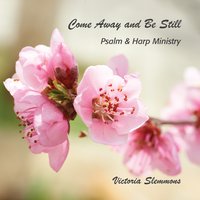
From the nursery to therapy, from devotions to retreats, from hospital to hospice, Come Away and Be Still is just what the Great Physician ordered: the Psalms set to simple settings, sung in Hebrew, accompanied by an award-winning a Blevins therapy harp. 

This lovely CD is available on CDBaby, iTunes, and Amazon. [But the samples at CDBaby are smoother for those who want to hear a bit.]

 Victoria Slemmons: Come Away And Be Still

Thursday, September 25, 2014

More comprehensive than the Daily Lectionary

UPDATE: I see the prequel / sequel to The Spirit at Work is now available, appropriately entitled The Word at Work. It follows the same format: a one-year Bible reading plan with brief devotional commentary on selected texts. This one starts the second Sunday of Easter, but with a bit of subjective adjustment, can be taken up any time of year.


_____

Students have often asked me if the Daily Lectionary is not sufficiently comprehensive, but in fact its two-year reading plan does not actually cover the entire canon. Here is a source, however, that does include the whole canon in a single year. It also approaches the reading of the Psalter (three per day) in the way I have done (and recommended others do) on numerous occasions. Interestingly enough, though it spans a calendar year, it starts on Pentecost Sunday, so perhaps this would be a good time to try it. [May 28, 2014]


Wednesday, July 2, 2014

Monday, June 23, 2014

Come Away and Be Still: Psalm & Harp Ministry, Volume 1

UPDATE: Come Away and Be Still is now available on iTunes ... and now Amazon.

Introducing this lovely CD of psalm settings accompanied on a Blevins therapy harp. Wonderful for prayer meetings, for retreats, for the nursery, for hospital or hospice settings, or just for cultivating an atmosphere of domestic tranquility as a sanctuary from a stressful world. Victoria's vision has been to recreate the psalms as they may have first sounded: sung/chanted in Hebrew and played on the harp with a simple tone.


Victoria Slemmons: Come Away And Be Still